A clearer way to understand shared solar
Solar access that doesn’t start on your roof.
Community solar connects eligible utility customers to a share of energy from a solar farm elsewhere. No rooftop panels needed. Your local program determines how participation and bill credits work.
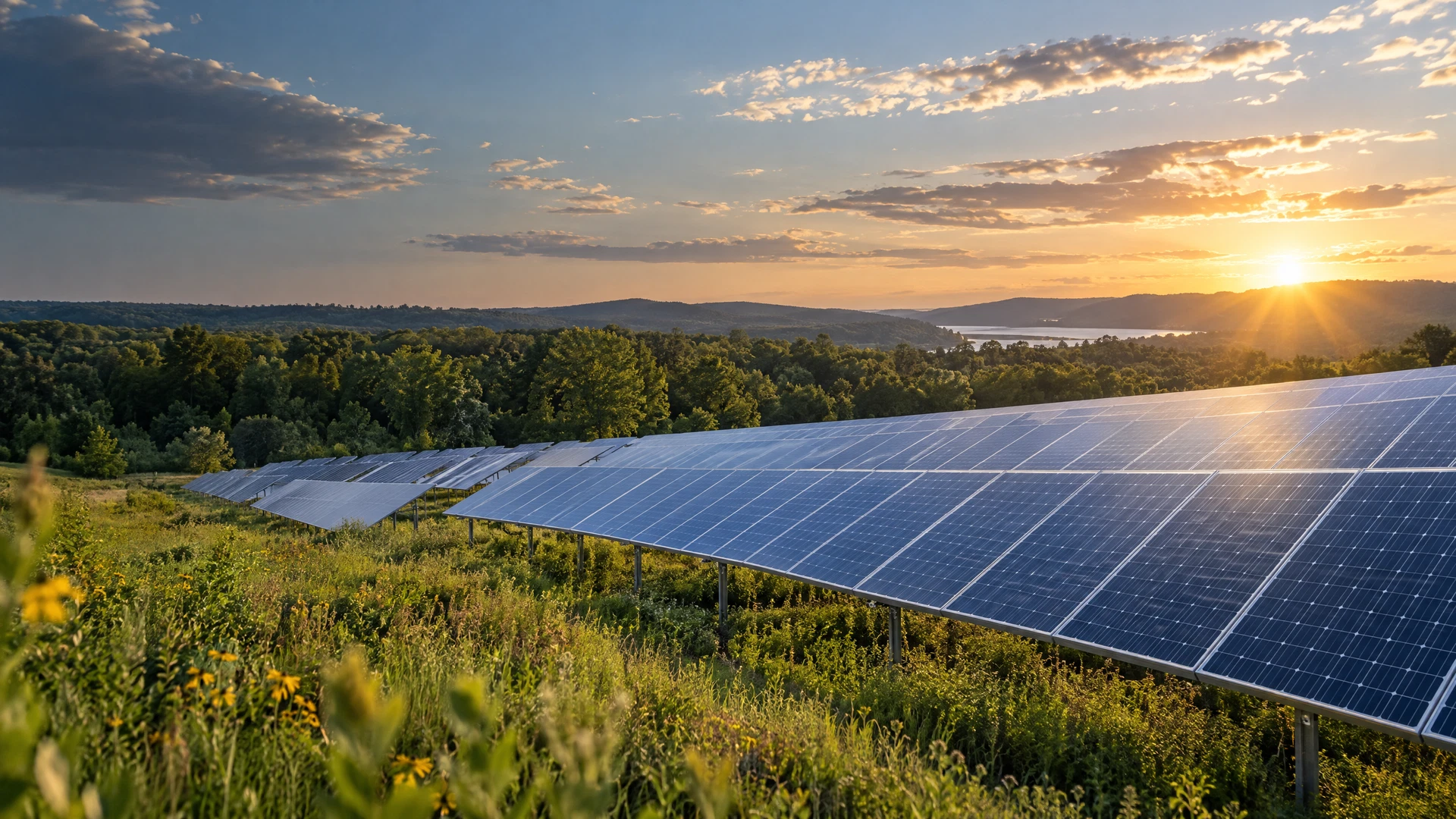
Solar power, shared by more than one household.
Community solar is a way for multiple customers to benefit from electricity made at a shared solar project. The panels are not on your roof. They might be on open land, a building, or another suitable site connected to the electric grid.
If a local program accepts your utility account, you may subscribe to a portion of a project’s output. The project generates electricity, and the utility may apply a bill credit tied to your share. You still use your normal electricity service.
Follow the four-step storyThink of it as a subscription to a share of solar production—not a solar installation at your home and not a replacement for your utility.
Four simple steps, with the important details
From solar farm to bill credit.
Move through the slides at your own pace. Every program has its own rules and timing.
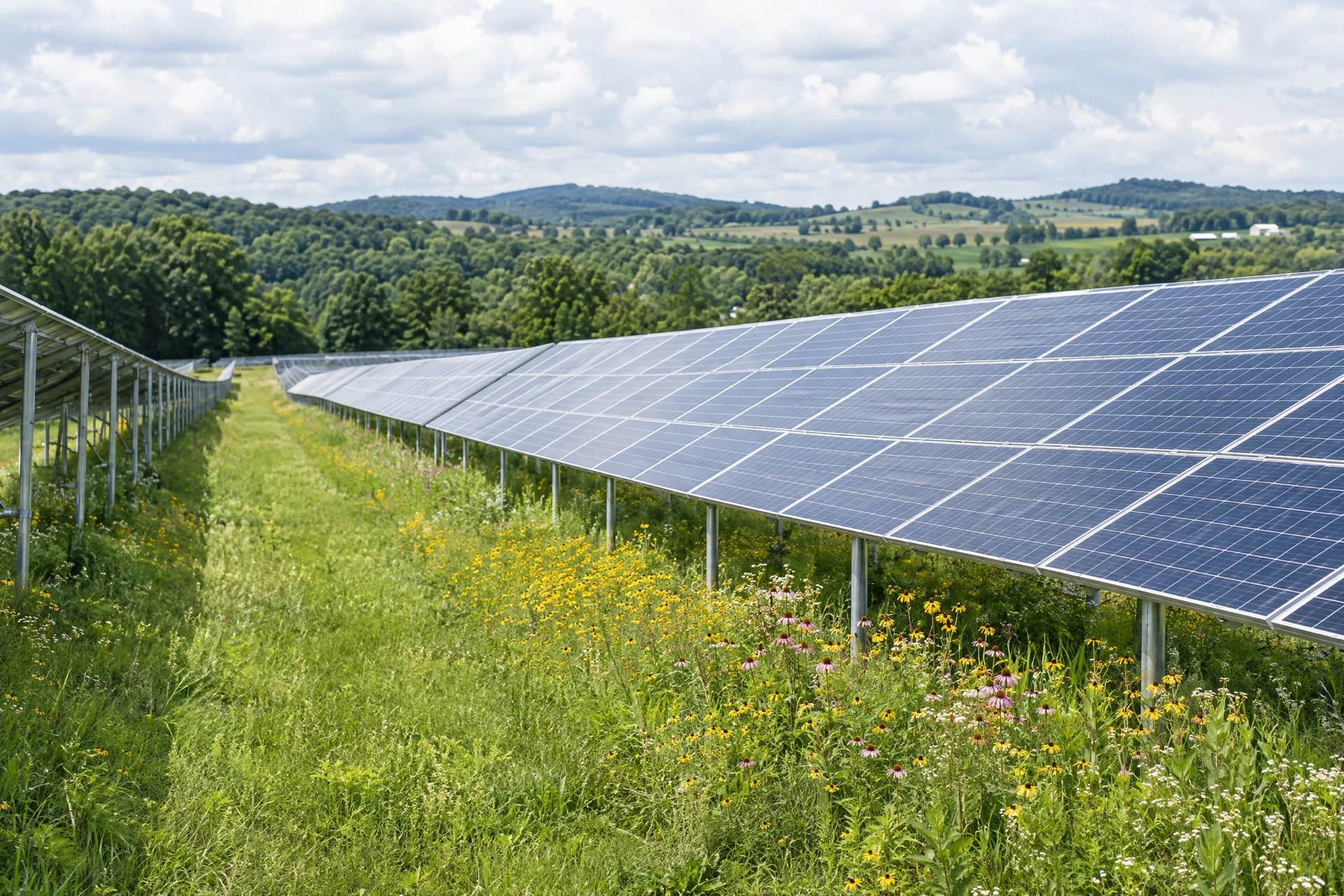 A shared solar array
based on program rules
A project needs a place, a plan, and funding
What a solar farm looks like—and how one becomes a bill credit.
These images are examples. Layout, land use, equipment, financing, and enrollment timing vary by site, state, and utility.
A solar farm is a group of panels at a shared site. Its main purpose is to generate electricity and connect that power to the electric grid. A community-solar program may then allocate part of the project’s output to eligible utility accounts under local rules.
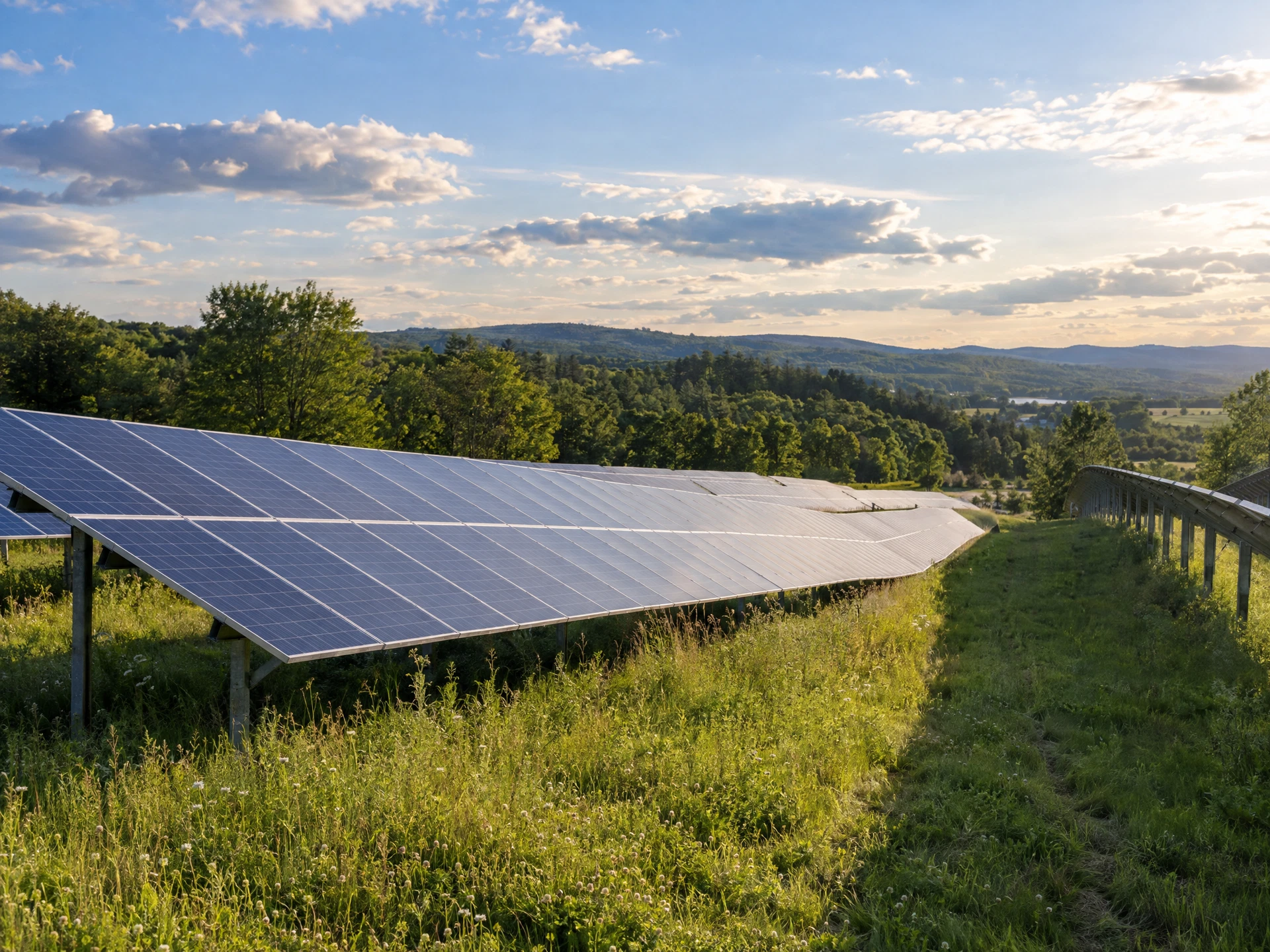
Ground-mounted rows
Panels are fixed to rows of support racks on suitable land. The layout and spacing depend on the site and system design.
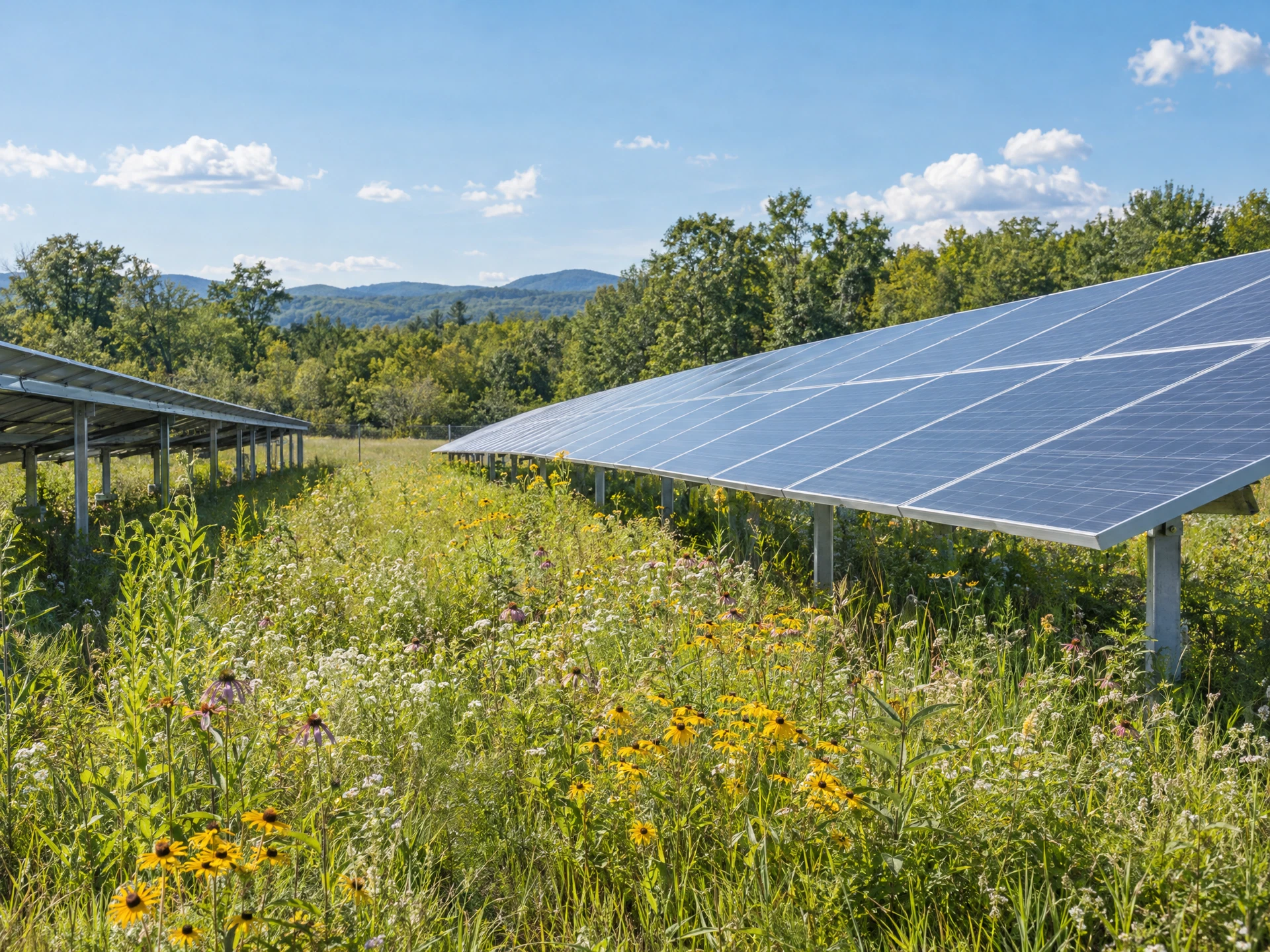
Vegetation between the panels
Some sites use compatible grass or native groundcover around panel rows. The approach depends on local conditions and project plans.
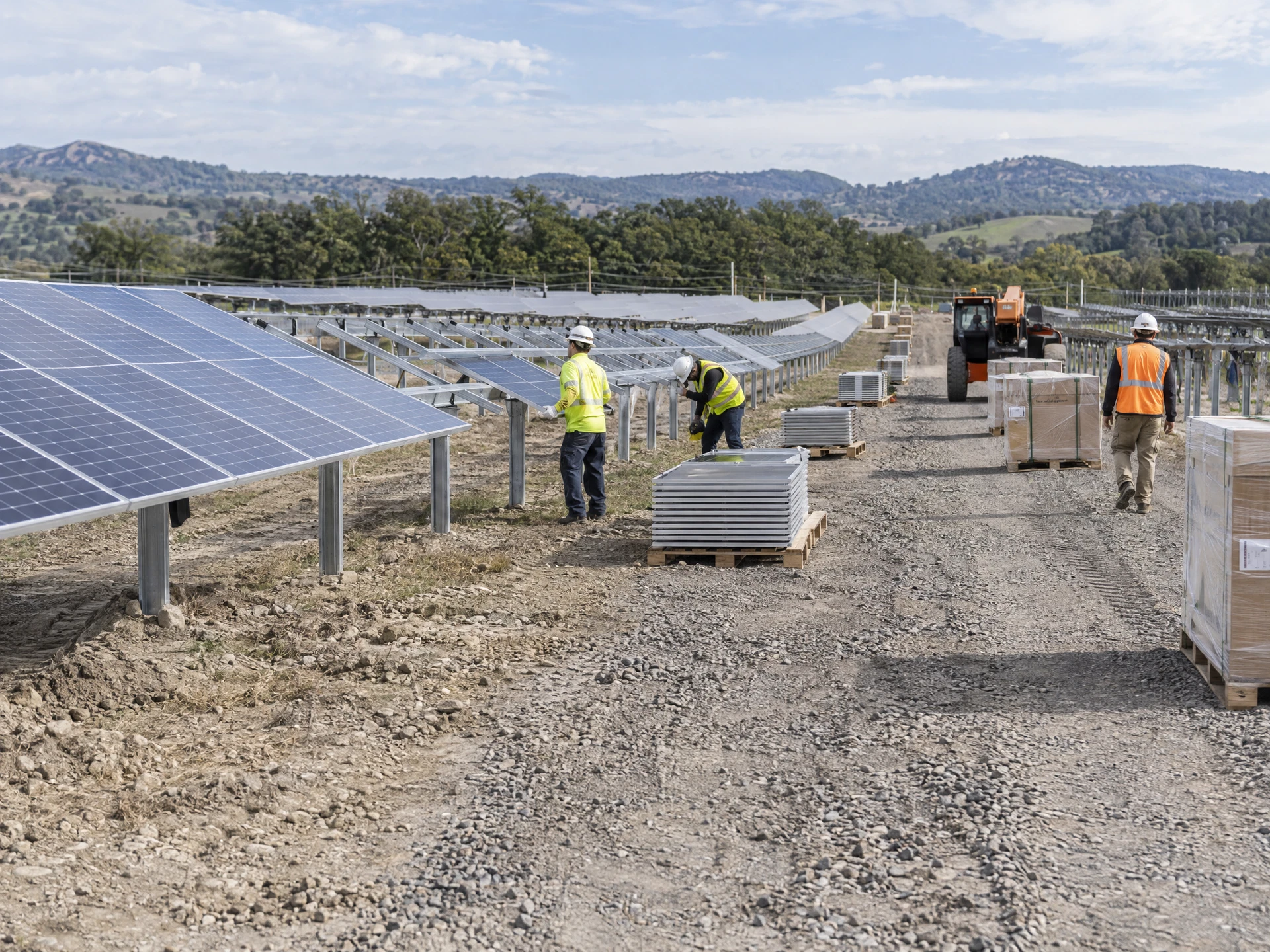
Built in planned stages
Crews prepare the site, install supports and panels, connect electrical equipment, and complete inspections before the project operates.
WHAT HAPPENS AT THE SITE
The farm makes electricity for the grid—not a private wire to your home.
Sunlight creates electricity in the panels. Inverters and other equipment prepare it for the grid, and meters record what the project produces. The utility grid carries electricity to homes and businesses; it is not traced from one particular solar farm to one subscriber.
Your home keeps using its normal utility service. Any bill credit is assigned through the applicable program and utility rules.
FROM SITE PLAN TO CUSTOMER SIGN-UP
How a project moves from an idea to a bill credit.
These stages can overlap, and exact requirements differ by location and project.
- 01
Screen a suitable site
Check site conditions, land arrangements, solar access, and whether a grid connection may be possible.
- 02
Design and seek approvals
Develop the project design and complete the applicable land-use, permit, environmental, and utility interconnection reviews.
- 03
Arrange project financing
Combine available owner or investor capital and loans; eligible tax-credit investment, incentives, or grants may also help fund the build.
- 04
Build, inspect, and connect
Install the support racks, panels, inverters, wiring, and metering, then test the system and complete utility and local approvals.
- 05
Generate and maintain
Once operating, the project sends electricity to the grid. Revenue from electricity sales or other agreements may help cover operating costs and repayment, depending on its contracts.
- 06
Check an offer and sign up
When enrollment is open, a customer checks their address, utility, and account type, reads the written terms, and chooses whether to subscribe. Enrollment may open before or after the farm starts operating.
- 07
Match the share to the utility account
The program assigns the subscribed share under its rules. Bill credits begin only after the project, program, and utility are ready to apply them.
Your customer payment arrangement comes from the written offer—not the construction budget. Ask when your first credit is expected and compare the billing models before enrolling.
Two ways bill credits can show up
Which billing model applies to you?
Community solar credits appear differently depending on the billing model. With consolidated billing, the credit is on your regular utility bill. With dual billing, the utility bill and the solar-farm bill are separate.
A general range customers may see is roughly 5%–40% off the electric bill as a bill-credit discount. The actual credit depends on your state, utility, and program; this range is not a promised amount or a guarantee of total savings.
See what to askThis is a general estimate, not a quote or guarantee. Ask what credit amount and calculation apply to your account.
Consolidated billing
Your community-solar bill credit appears on your regular utility bill. You keep paying your utility the way you already do.
- No separate solar-farm bill
- No direct payment to the solar farm or card on file with it
- No change to your usual utility payment setup
With consolidated billing, you do not pay the solar farm directly.
Dual billing
Only customers in a dual-billing arrangement receive two bills:
- A local utility bill showing a $0 balance after bill credits under this arrangement
- A separate, discounted solar-farm bill, paid according to the offer terms
The second bill is from the solar farm—not a second utility bill.
Billing model, actual credit, discount, and timing vary by state, utility, and program. Confirm your specific bill-credit amount and any amount due in writing before enrolling.

Start with the account, not the roof
The right first step is a location check.
Community solar may be worth exploring if you rent, your roof is not right for solar, or you simply prefer not to install equipment. But availability is not universal. Your service address and utility area matter.
- 01Service locationThe project must be able to serve accounts in your area.
- 02Utility and account typePrograms may accept some utilities or customer classes and not others.
- 03Open enrollmentThere must be a program or subscription available to join.
Some programs fill on a first-come, first-served basis. Ask Carl about current availability for your utility area; asking does not reserve a spot.
To ask about fit, have your service address, utility name, and a recent bill handy. Don’t post your account number or personal billing details in a public message.
A considered decision, one step at a time
From first question to first credit.
Enrollment and credit timing depend on the program and utility. Ask what to expect for your specific account.
- 01
Talk through your location
Share your service address and utility name to find out whether a relevant program may be available.
- 02
Confirm eligibility
Check that your service area, account type, and utility meet the program’s current requirements.
- 03
Read the written offer
Understand the credit formula, payment amount, fees, contract length, cancellation terms, and expected timing.
- 04
Choose whether to enroll
If the program makes sense to you, follow its enrollment steps and review any authorizations before signing.
- 05
Watch for utility processing
Your subscription needs to be matched to your account. Ask when the first credit is expected and how it will appear.
A useful conversation to have
Ask the details that shape your real cost.
Program terms are not all the same. Keep the written offer and ask questions until you can explain the arrangement in your own words.
Talk it through with CarlHow is my bill credit calculated, and when will it show up?
Which billing model applies to me: consolidated or dual?
Can I see a sample utility bill and, for dual billing, the separate discounted solar-farm bill?
Do I need to add a payment card or change how I pay my utility?
What fees, minimums, or other costs could apply?
How long does the agreement last, and how do I cancel?
Could I move my subscription if I change addresses?
What happens if the solar project or utility processing is delayed?
What consumer protections and complaint options are available?
Can I review all disclosures and terms before authorizing enrollment?
A few important distinctions
What community solar is—and isn’t.
Knowing what a subscription does not do is just as useful as knowing what it may do.
It isn’t rooftop solar.
You generally do not install or own panels on your home just by subscribing to a shared project.
It doesn’t replace your utility.
Your utility continues to provide service. The project’s electricity goes to the grid, not through a dedicated wire to your home.
A bill credit is not the same as free electricity.
Consolidated billing has no direct solar-farm payment; dual billing includes a separate, discounted solar-farm bill.
It isn’t guaranteed savings.
Whether there is a net benefit depends on actual credits, charges, timing, and your program’s written terms.
The details people usually want to know
Community solar, answered plainly.
These are general explanations. Your program documents and local rules are the source for your specific terms.
Ask Carl a questionDo I need to own a home or install solar panels?
No rooftop installation is required for the typical off-site subscription model. Renters and homeowners may be able to participate, depending on the program and utility account rules.
Will I still receive a utility bill?
Yes. Your local utility continues providing electricity service. With consolidated billing, the community-solar bill credit appears on that utility bill. With dual billing, the utility bill is separate from the discounted solar-farm bill and, under that arrangement, shows a $0 balance after credits.
What’s the difference between consolidated billing and dual billing?
With consolidated billing, you receive your usual utility bill with the community-solar bill credit on it; you do not receive a separate solar-farm bill or pay the solar farm directly. With dual billing, only dual-billing customers receive two bills: a local utility bill showing a $0 balance after credits under that arrangement, plus a separate discounted solar-farm bill.
Do I need a card on file or have to change how I pay?
For consolidated billing, you do not pay the solar farm directly, do not need a payment card on file with it, and do not need to change your usual utility payment setup. With dual billing, follow the separate solar-farm bill’s payment instructions in your offer.
How much bill credit might appear on my electric bill?
A general range customers may see is roughly 5%–40% off the electric bill as a bill-credit discount. The actual bill credit depends on state, utility, program, and account terms. This is an estimate—not a guaranteed amount or a guarantee of net savings. Ask for your specific credit calculation in writing.
Will I have one bill or two?
Only dual-billing customers receive two bills. Consolidated billing means one regular utility bill with the community-solar credit on it and no separate solar-farm bill. Dual billing means a utility bill showing a $0 balance after credits under that arrangement, plus a separate discounted solar-farm bill.
Does community solar guarantee that I will save?
No. The 5%–40% figure is a general range for a bill-credit discount off an electric bill—not a guaranteed credit or a net-savings promise. In dual billing, compare the credit with the separate discounted solar-farm bill; always review your written offer.
How do I know whether I’m eligible?
Eligibility can depend on your service address, utility, account type, state rules, and current program capacity. Space may be limited, and some programs fill on a first-come, first-served basis. Ask whether there is an opening for your utility area; not every area has a program available.
How soon would I see a bill credit?
Timing varies. Enrollment, project allocation, utility processing, and billing cycles can all affect the first credit. Ask for the expected sequence and what happens if it takes longer.
Who pays to build the solar farm?
Project funding may combine developer or investor capital and loans. Tax-credit investment, incentives, or grants may be available for some projects. The mix varies. A customer subscription generally is not an upfront payment for construction, but review your written offer for any fees or payment obligations.
What if I move or want to cancel?
Moving and cancellation rules depend on your agreement. Before you enroll, ask whether a subscription can transfer to a new address, how to cancel, how much notice is required, and whether any fees apply.
Will my home have power during an outage?
A community solar subscription is not, by itself, backup power for your home. The project supplies electricity to the grid; an outage can still interrupt normal utility service unless your home has separate backup equipment.
Do I own part of the solar panels?
Most community solar participants subscribe to a share of a project’s energy or bill credits rather than owning panels. Ownership structures can differ, so review exactly what the offer says you are purchasing or subscribing to.
What information should I have ready?
Your service address, utility name, account type, and a recent bill can help with an initial check. Share account numbers or other sensitive information only through a program’s approved secure enrollment process.
A real person, a clear answer
Let’s start with your utility area.
Share where your electricity service is located, and Carl can help you understand what to check next. Availability and program terms depend on your location.
A conversation is a chance to ask questions—not a commitment to enroll.